Ube Matcha Whip
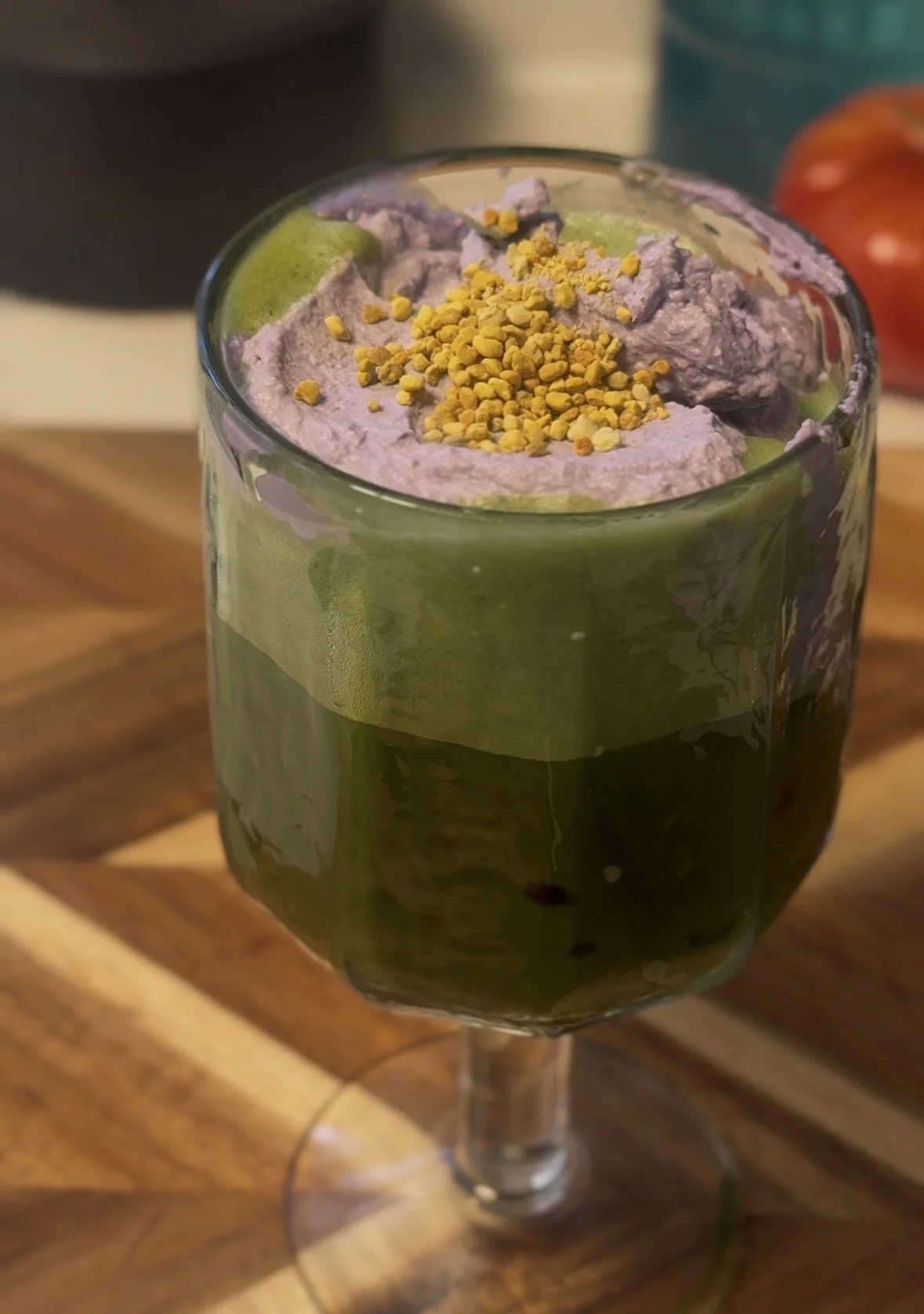
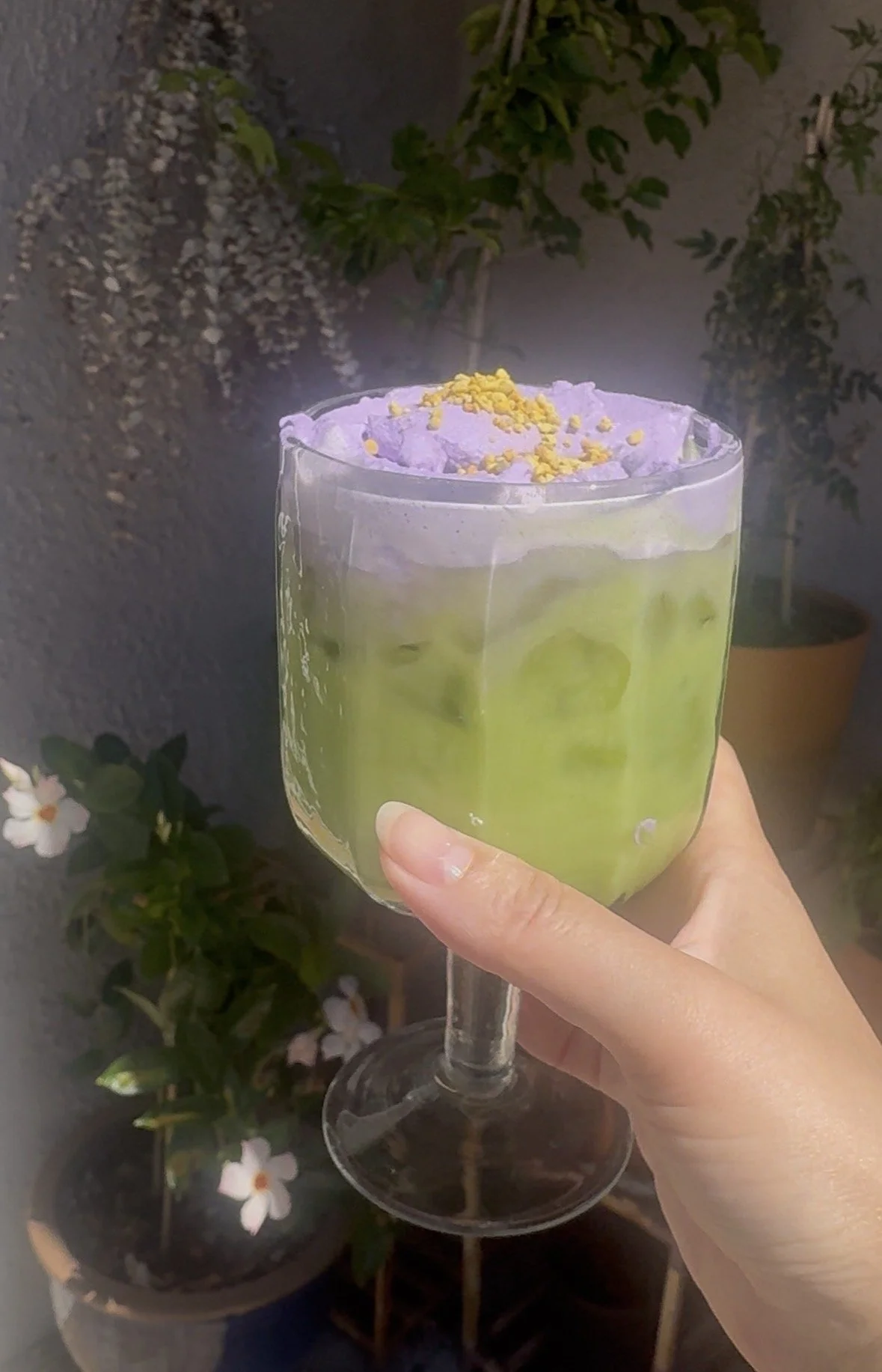
There’s a moment, right as the light hits this drink, when it stops looking like something you made and starts looking like a frame from a Studio Ghibli film. Lavender cream catches the sun as if it’s lit from within, and jade green settles underneath it like the bottom of a pond. It takes about ten minutes, and nearly all of it is whisking.
The drink has two parts that you make separately: a whipped ube cream and a bowl of hand-whisked matcha. They meet in a glass of ice and stay in layers until you stir.
About the ingredients
Ube is a purple yam (Dioscorea alata) grown across the Philippines and much of Southeast Asia. Its color comes from anthocyanins, the same family of pigments that makes blueberries and red cabbage purple. It has been a cultivated food crop in the region for a very long time, and it’s often confused with taro and with purple sweet potatoes, though it’s a different plant. The flavor is mellow, somewhere between vanilla, pistachio, and sweet potato. Ube condensed milk gives you the color and the sweetness in one ingredient, which is what makes the cream so easy.
Matcha is shade-grown green tea leaf, stone-ground into a fine powder. Whisking powdered tea in a bowl came to Japan from China, and the monk Eisai is traditionally credited with bringing tea seeds and the method back with him in 1191. The practice has stayed remarkably close to its original form since then: sift, add a little hot water, whisk until frothy.
Bee pollen is optional, but it adds a small gold crunch and a faint floral sweetness against the smooth cream.
Ingredients (makes 1 tall glass)
Ube cream
½ cup (120 ml) cold heavy whipping cream
2 to 3 tbsp ube-flavored sweetened condensed milk
Matcha
1 tsp matcha powder (ceremonial or a good culinary grade)
¼ cup (60 ml) hot water, around 175°F (80°C), not boiling
Optional: ¼ to ½ cup cold milk or oat milk, if you want a softer matcha
To assemble
Ice
A pinch of bee pollen
Instructions
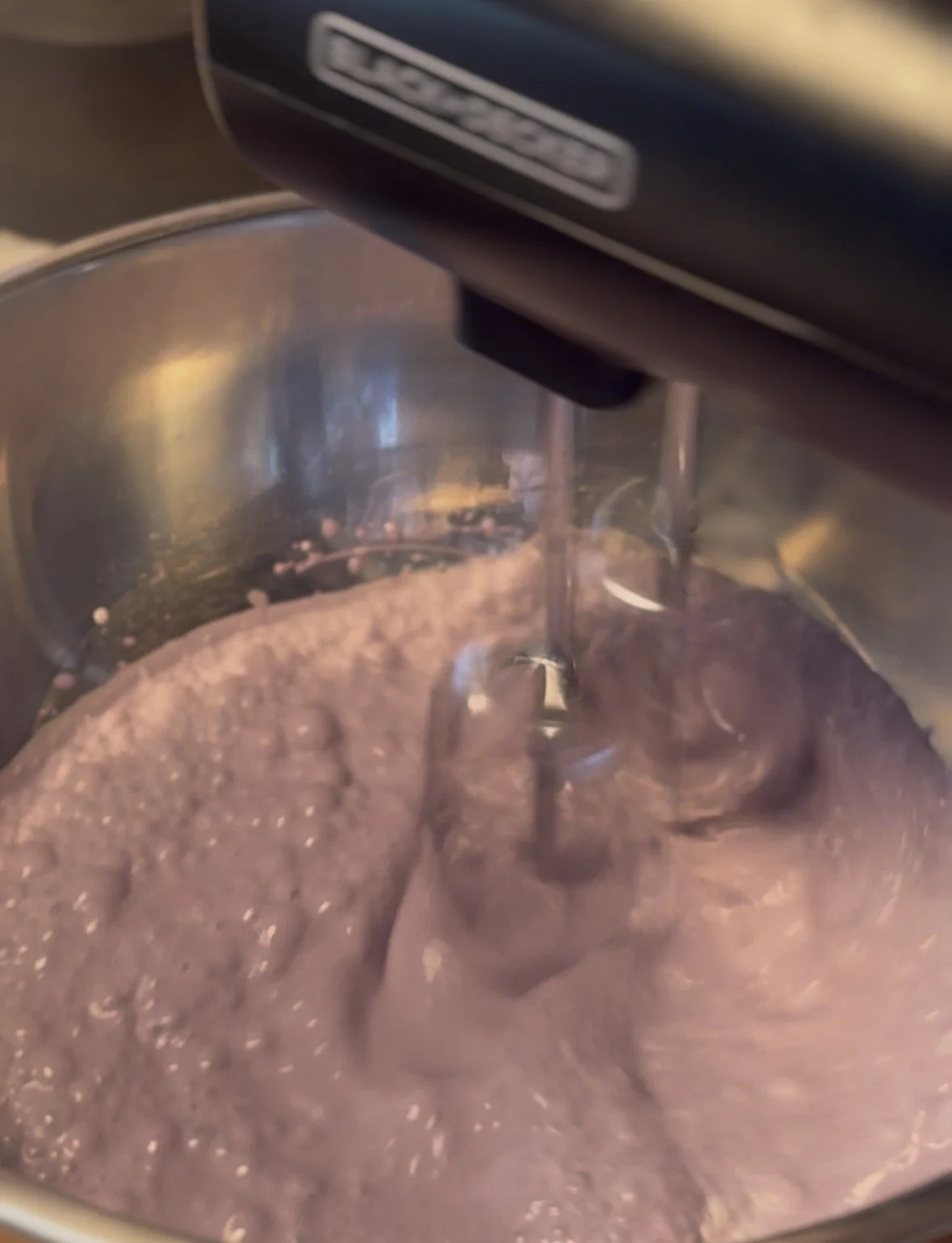
Whip the cream. Combine the cold cream and ube condensed milk in a chilled bowl. Whip with a whisk or hand mixer until it’s silky and holds soft, billowing peaks. Stop while it’s still pourable at the edges. The condensed milk makes it loosen faster than plain whipped cream, so watch it closely. Set it in the fridge.
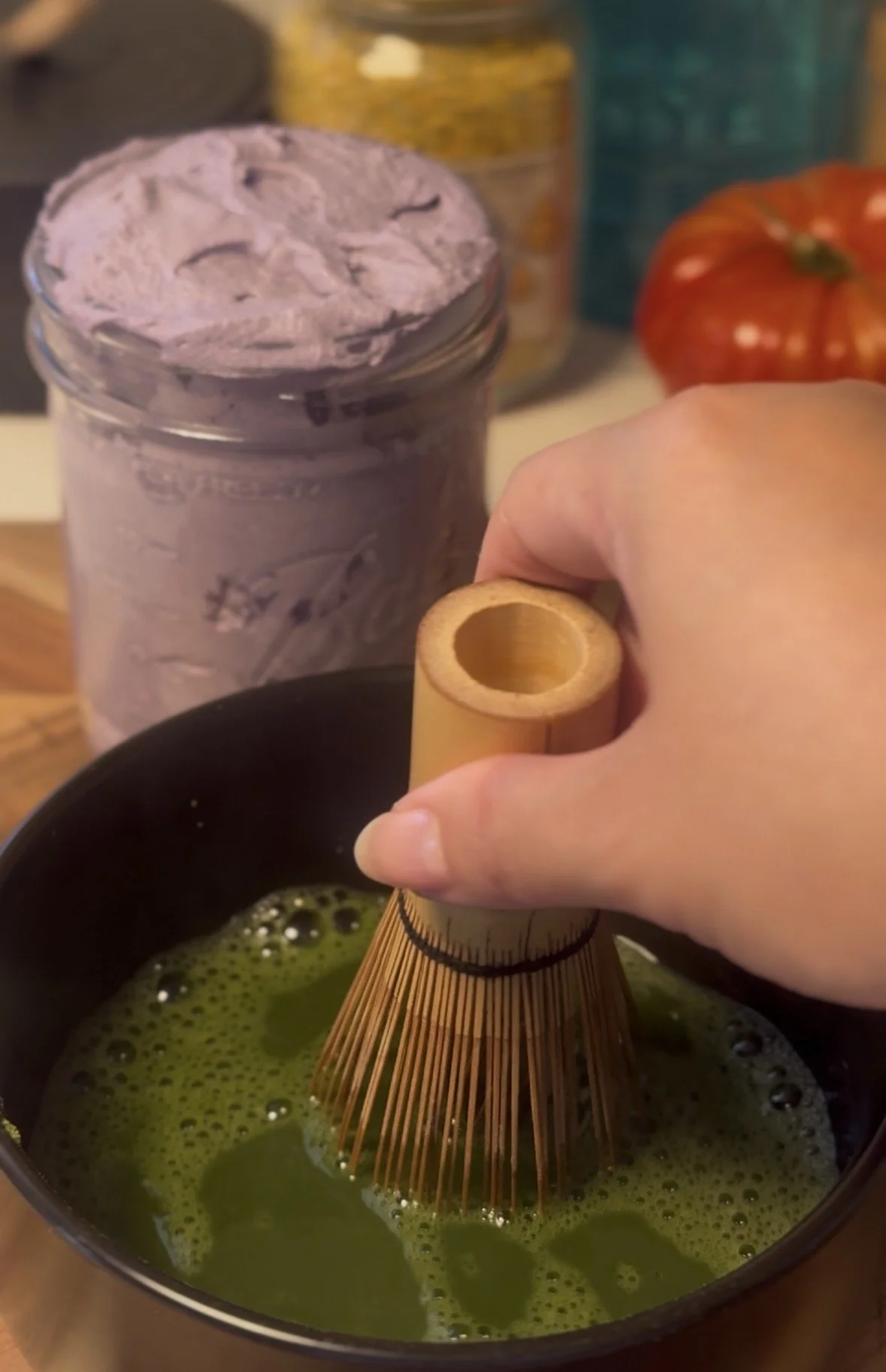
Sift the matcha. Push the powder through a small sieve into a wide bowl. This breaks up clumps and gives you a smooth foam.
Whisk. Add a splash of the hot water, just enough to make a paste, and mix it smooth. Add the rest of the water and whisk in quick back-and-forth strokes (a zigzag, not a circle) until a fine, pale green foam covers the surface. A bamboo whisk (chasen) is ideal, but a small electric frother works too.
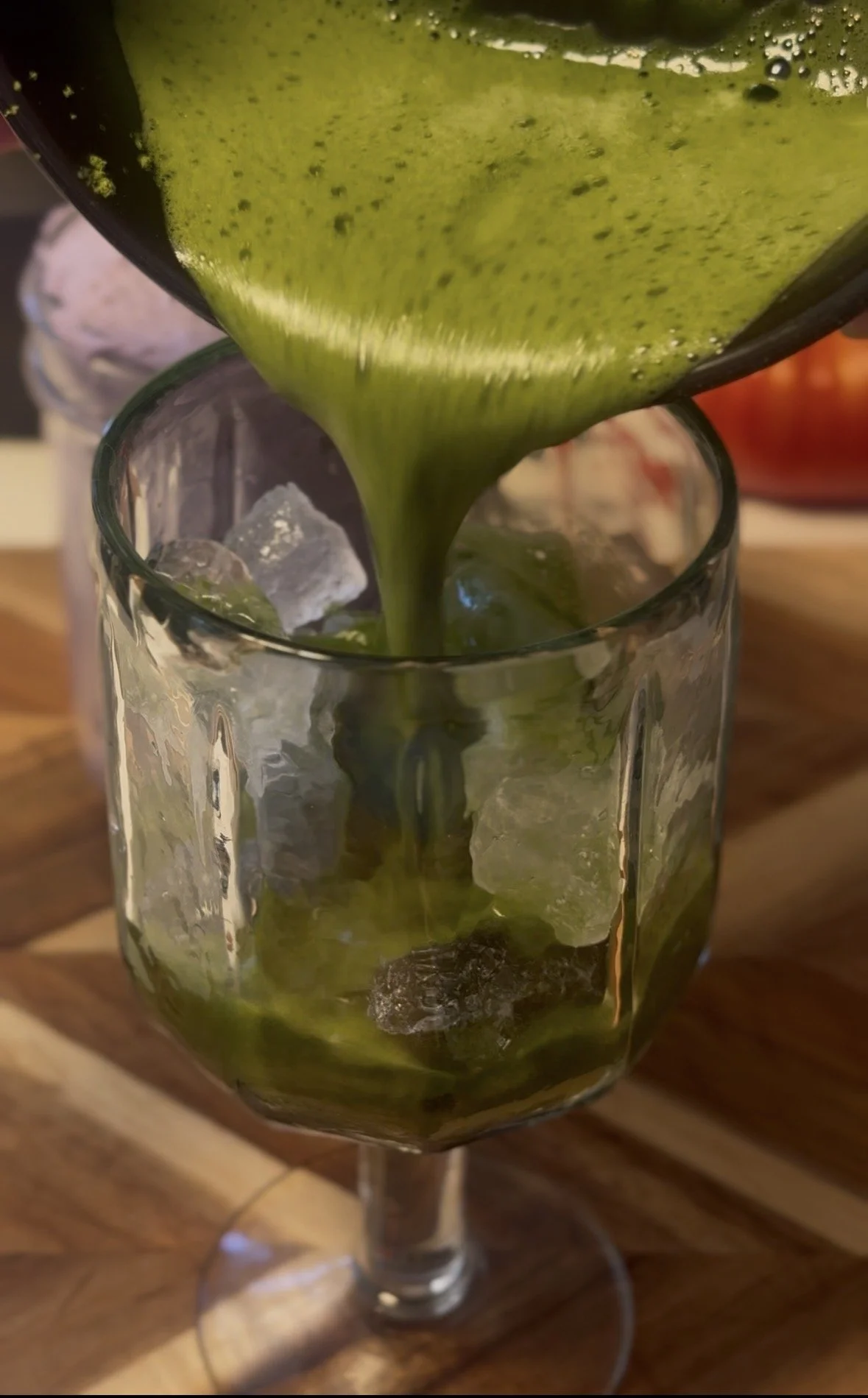
Build the glass. Fill a tall glass with ice. If you’re using milk, pour it in first. Then pour the matcha over the ice in a slow stream so it stays bright.
Add the cream. Spoon the ube cream on top and let it rest there. Don’t stir it in.
Finish. Scatter bee pollen over the surface and serve right away, in good light.
Tips
Keep it cold. Chill your bowl and whisk for 10 minutes before whipping. Cold cream whips faster and holds its shape longer.
Water temperature matters. Boiling water scorches matcha and turns it bitter. Let a kettle sit for a couple of minutes after it boils.
Cream sinking? If the cream mixes down into the matcha, it’s usually too loose. Whip it a little longer, or add more ice so it has something to rest on.
Make it vegan. Use chilled full-fat coconut cream (from the top of a refrigerated can) for the cream layer.
Ube extract instead of condensed milk? Whip the cream with 1 to 2 tbsp sugar and ½ tsp ube extract. The color will be a little less pastel.
Caffeine: Matcha has roughly as much caffeine as a cup of coffee per teaspoon, so keep that in mind for the evening.
Bee pollen: Skip it if you have pollen or bee product allergies, since it can trigger reactions in some people.