Strawberry Rhubarb & Rose Custard Pie
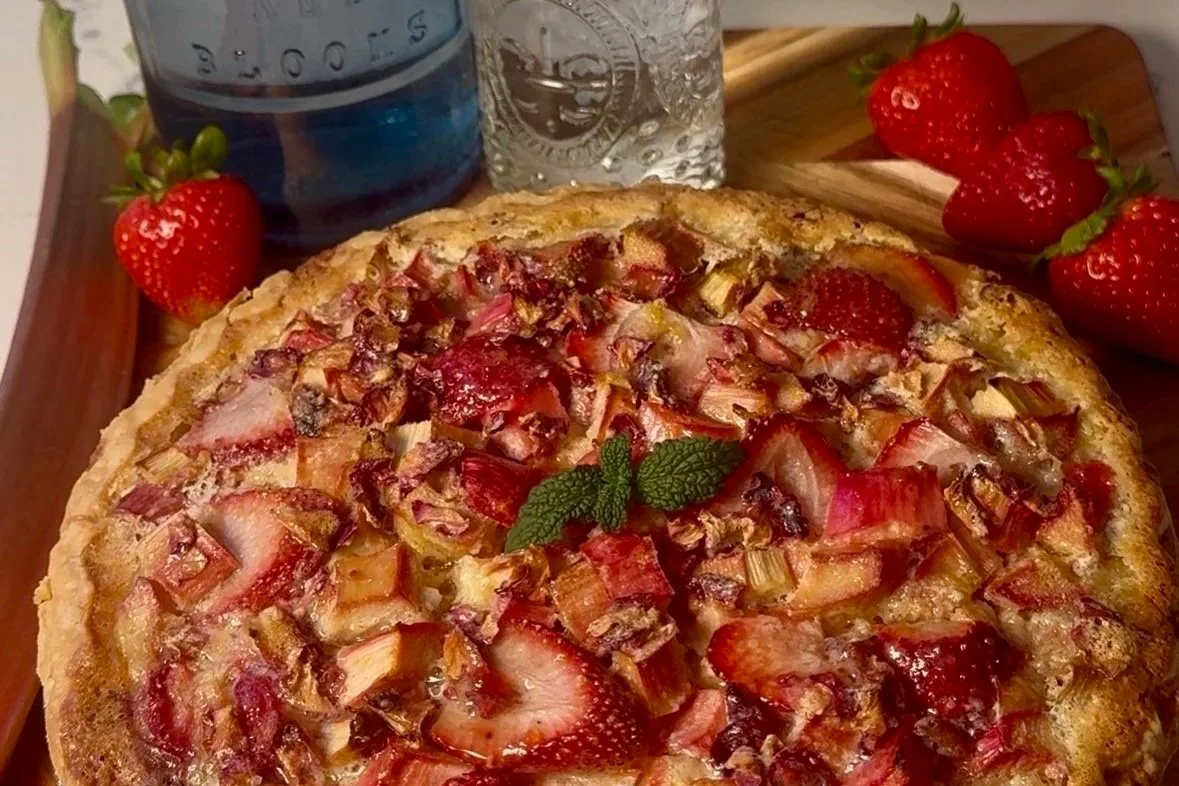
Strawberry Rhubarb Rose Custard Pie Recipe
Serves 8 | 9-inch pie
Ingredients
1 unbaked 9-inch pie crust
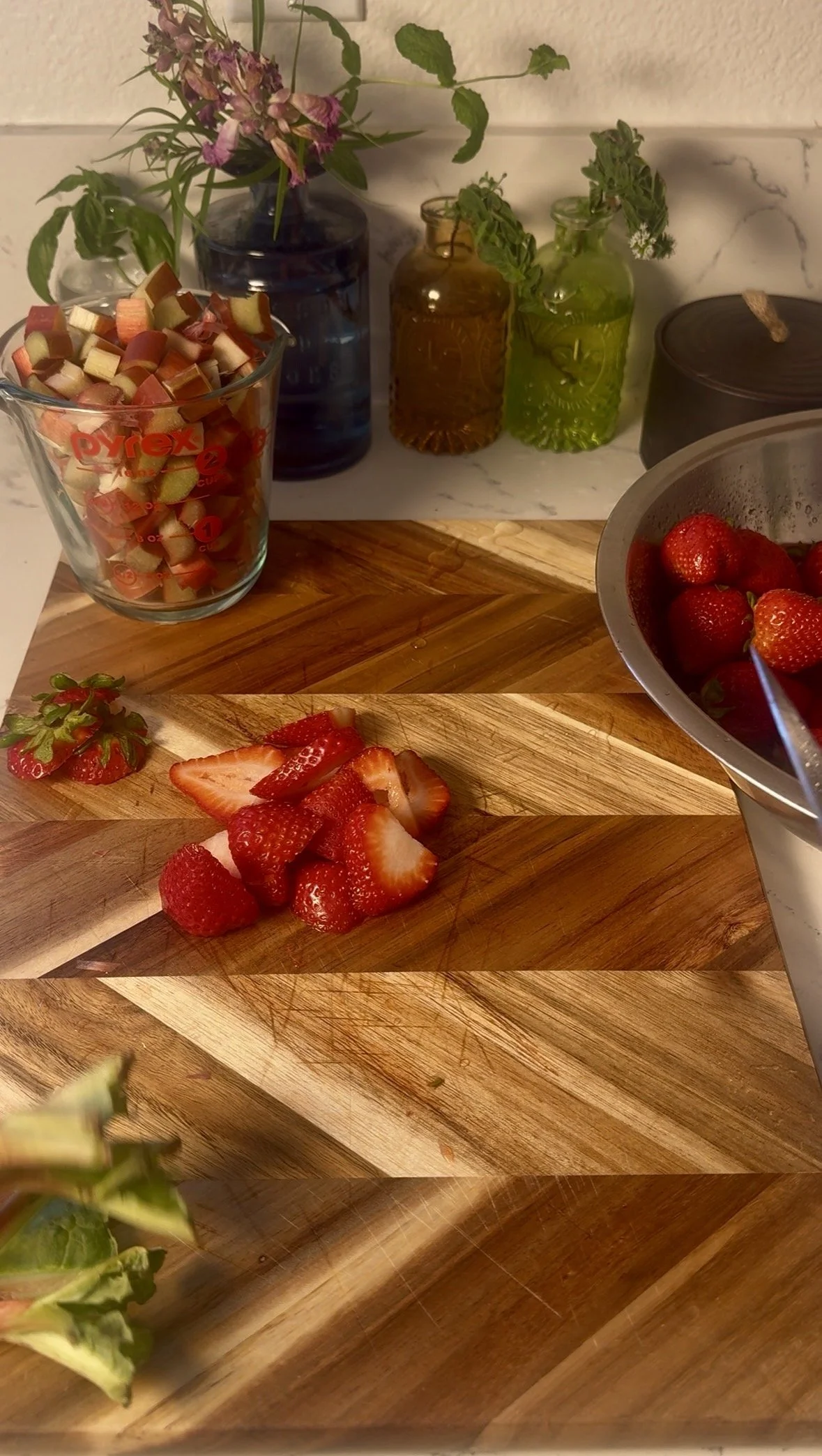
3 cups rhubarb,
sliced ¼-inch thick 1
cup fresh strawberries, quartered
3 large eggs
1½ cups white sugar
3 tablespoons milk
3 tablespoons all-purpose flour
¼ teaspoon freshly grated nutmeg
1 tablespoon butter, diced
2 tablespoons strawberry jam
¼ teaspoon water
1 tablespoon rose water
¼ cup dried rose petals
Instructions
Preheat oven to 350°F. Place pie crust in a 9-inch pie plate set on a parchment-lined baking sheet.
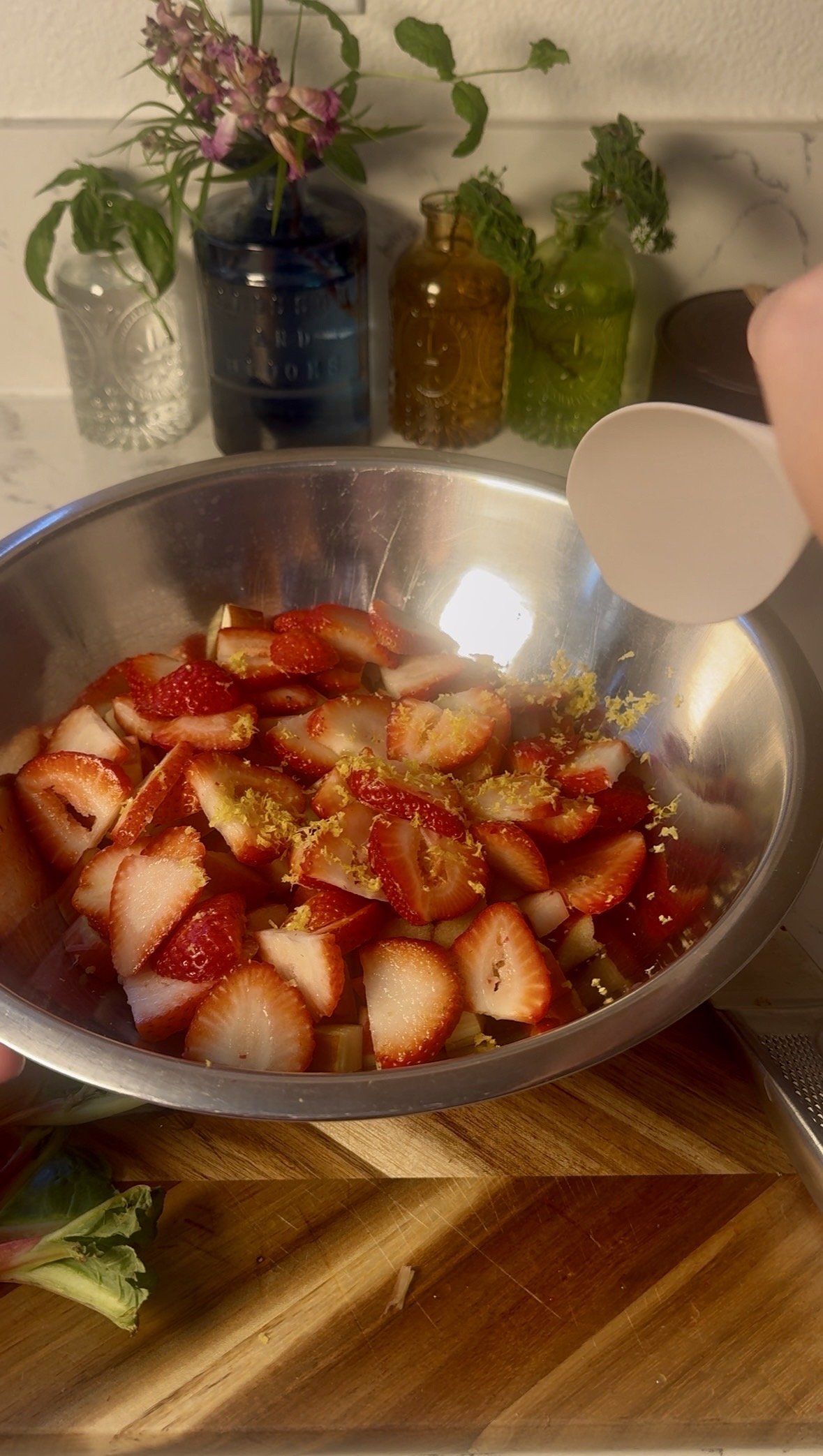
Combine rhubarb and strawberries and distribute evenly into the crust.
Whisk together eggs, sugar, milk, flour, nutmeg, rose water, and dried rose petals.
Pour slowly over the fruit until it just reaches the top edge of the crust.
Scatter diced butter over the top and gently tap the pan to release any air bubbles.
Bake for about 1 hour, turning halfway through, until the rhubarb is tender and the custard is set.
Warm strawberry jam with a splash of water and glaze the top of the pie.
Let cool completely and refrigerate until ready to serve.
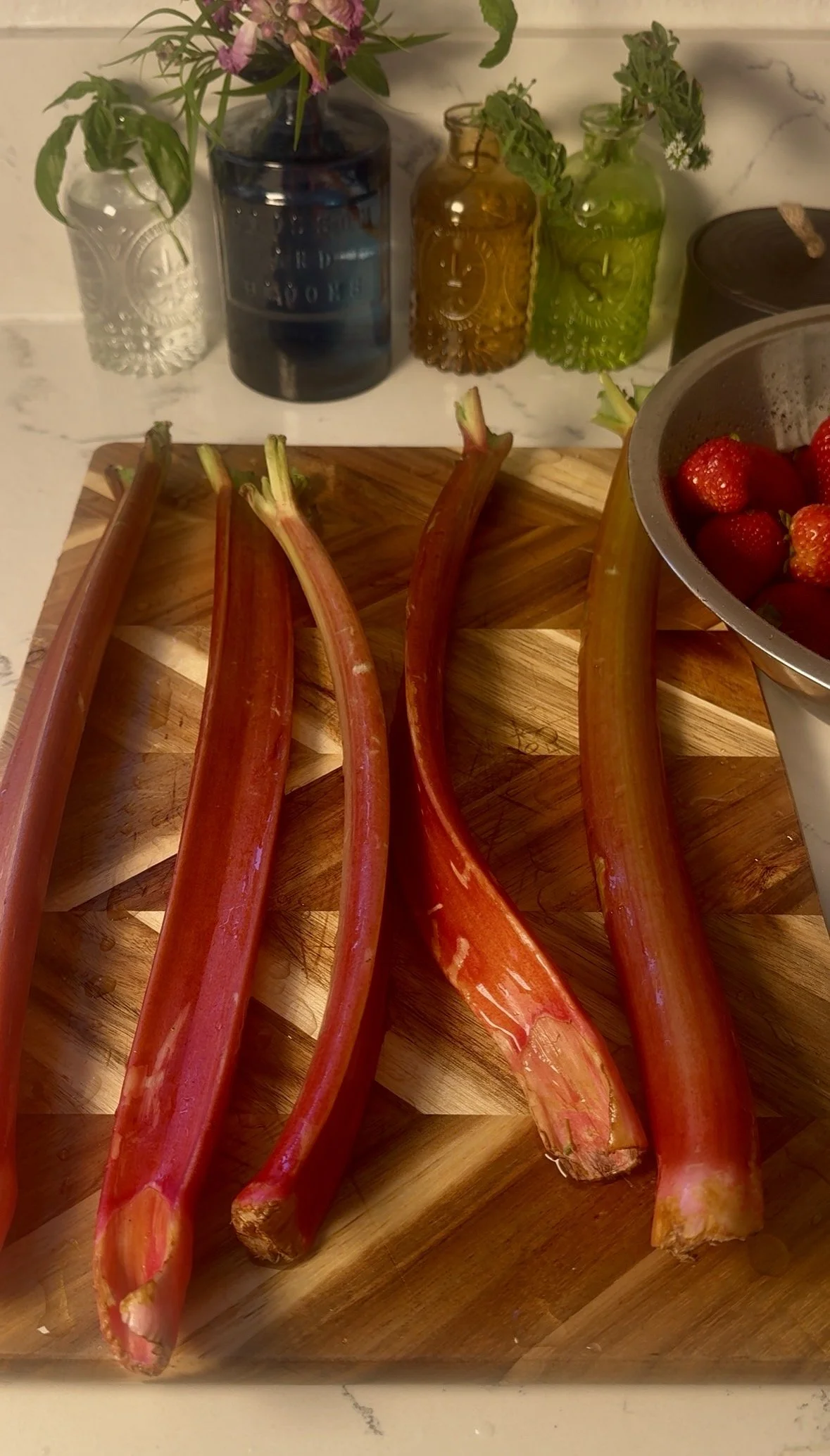
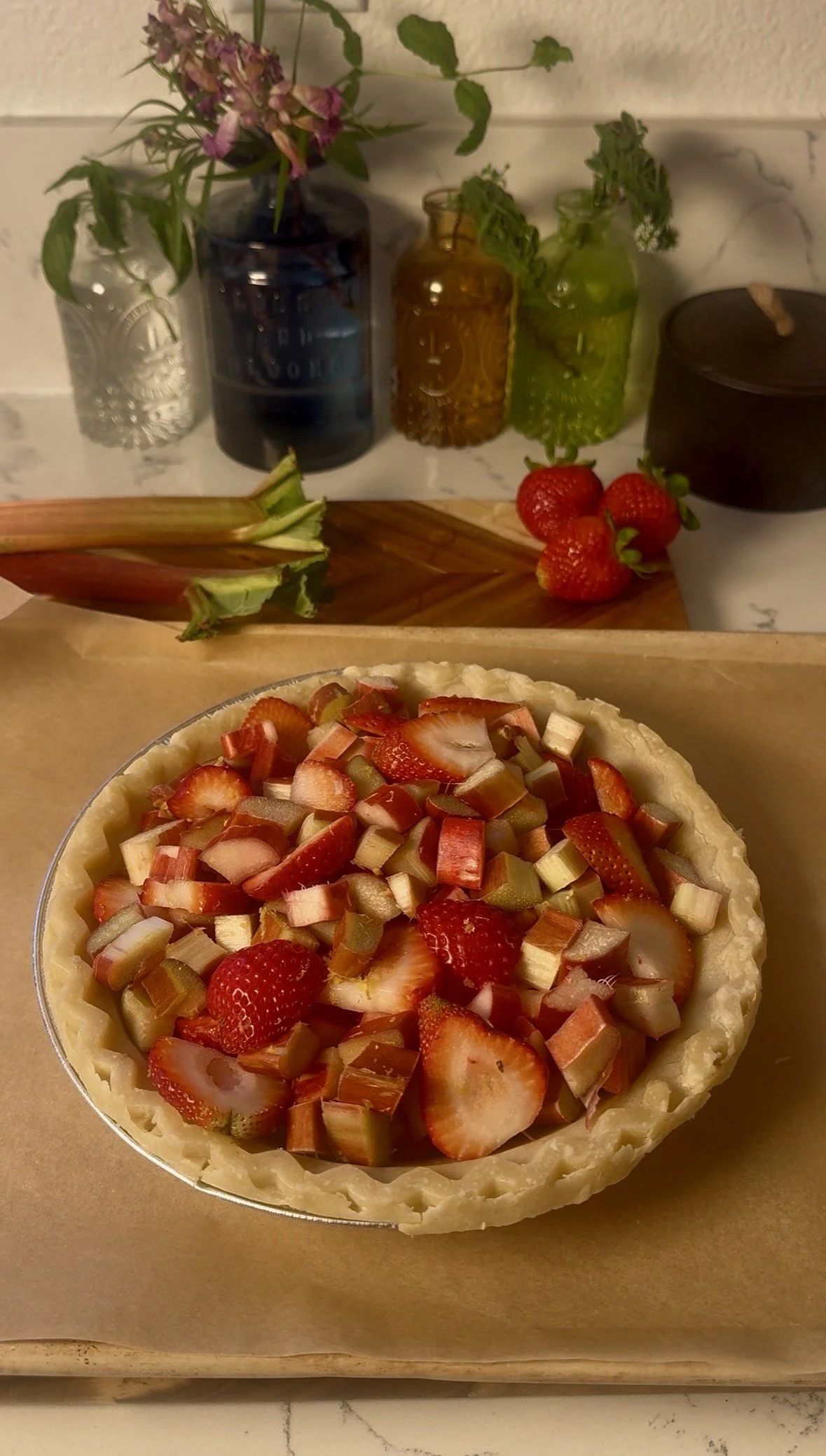
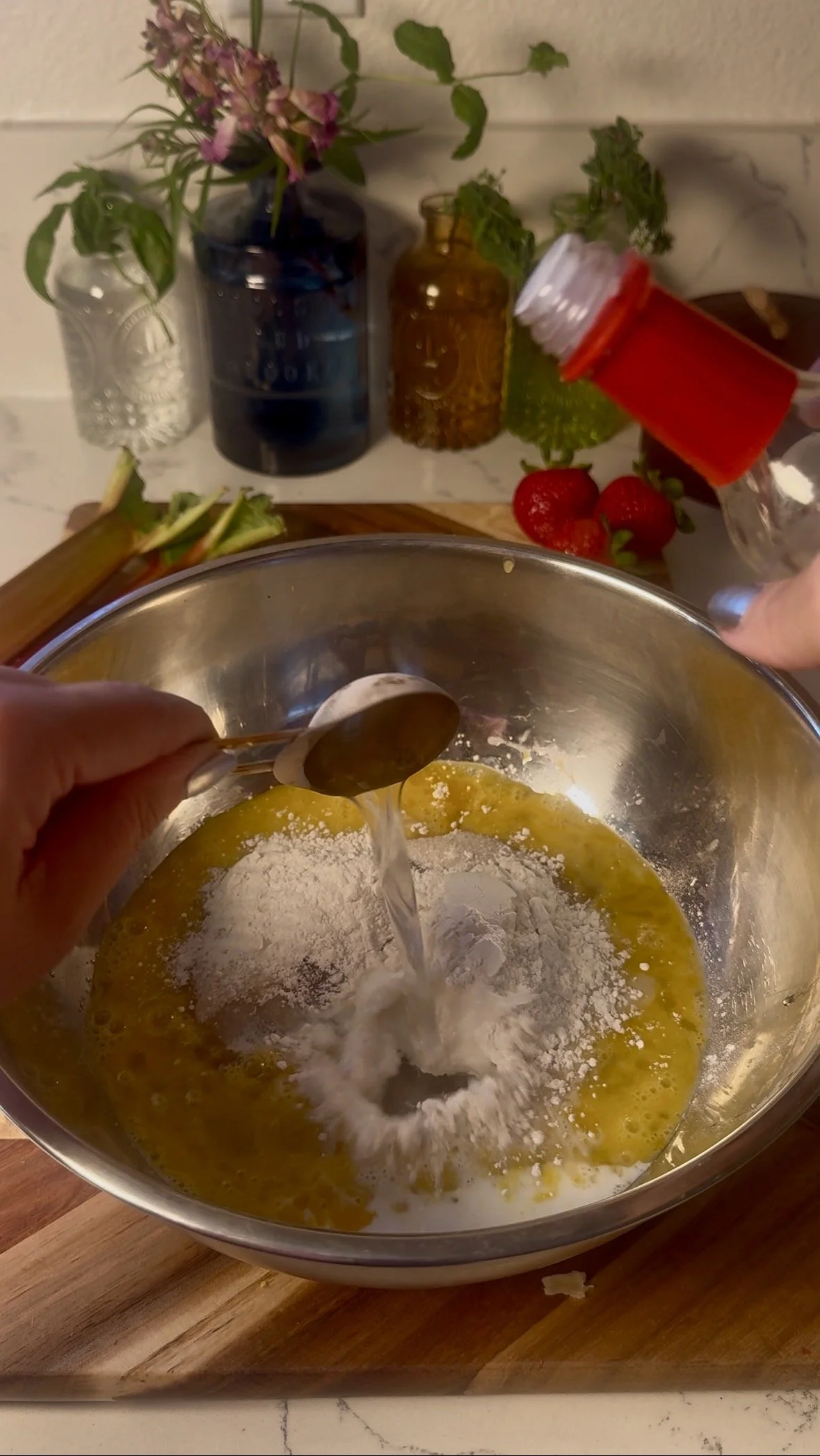
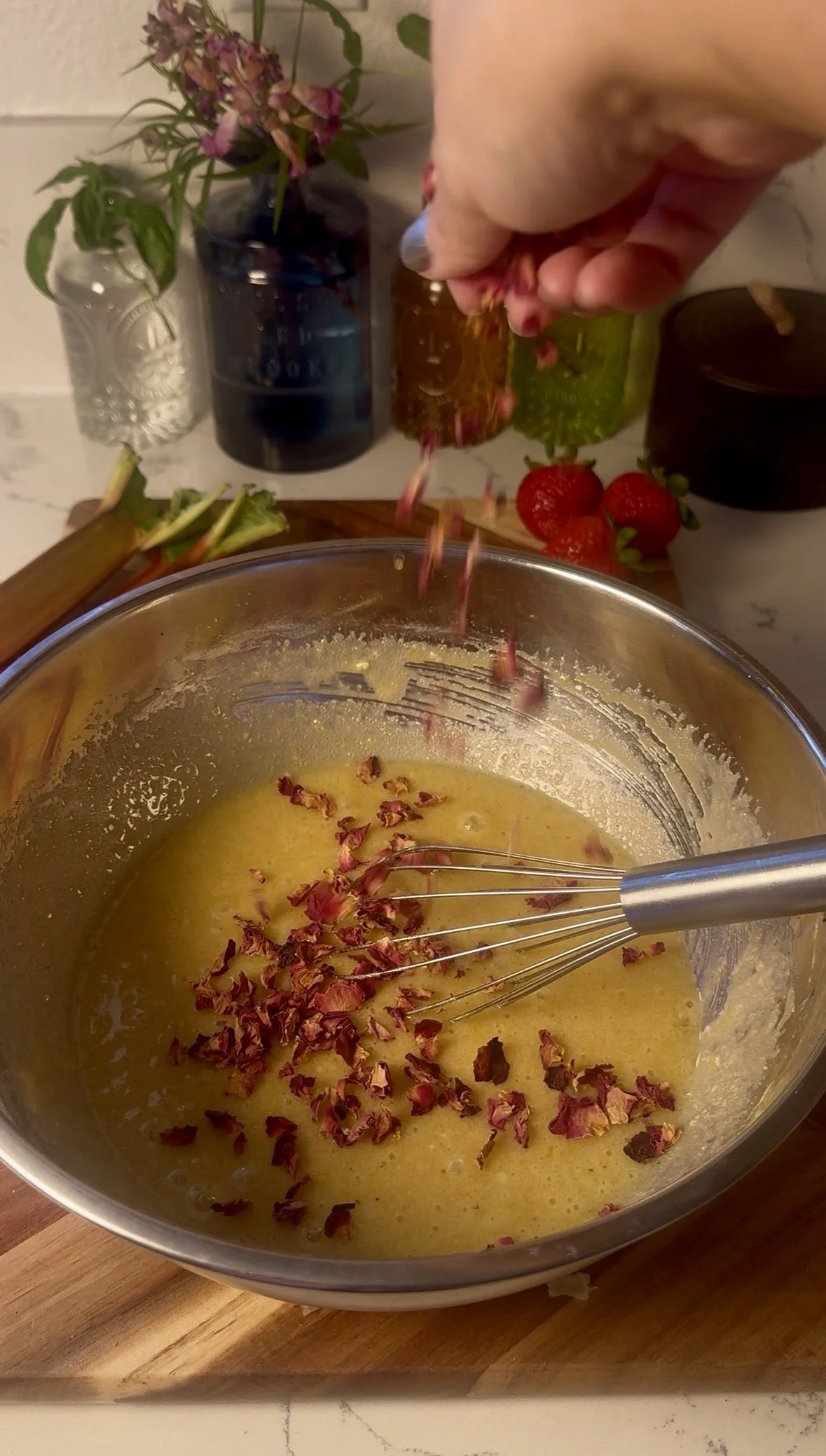
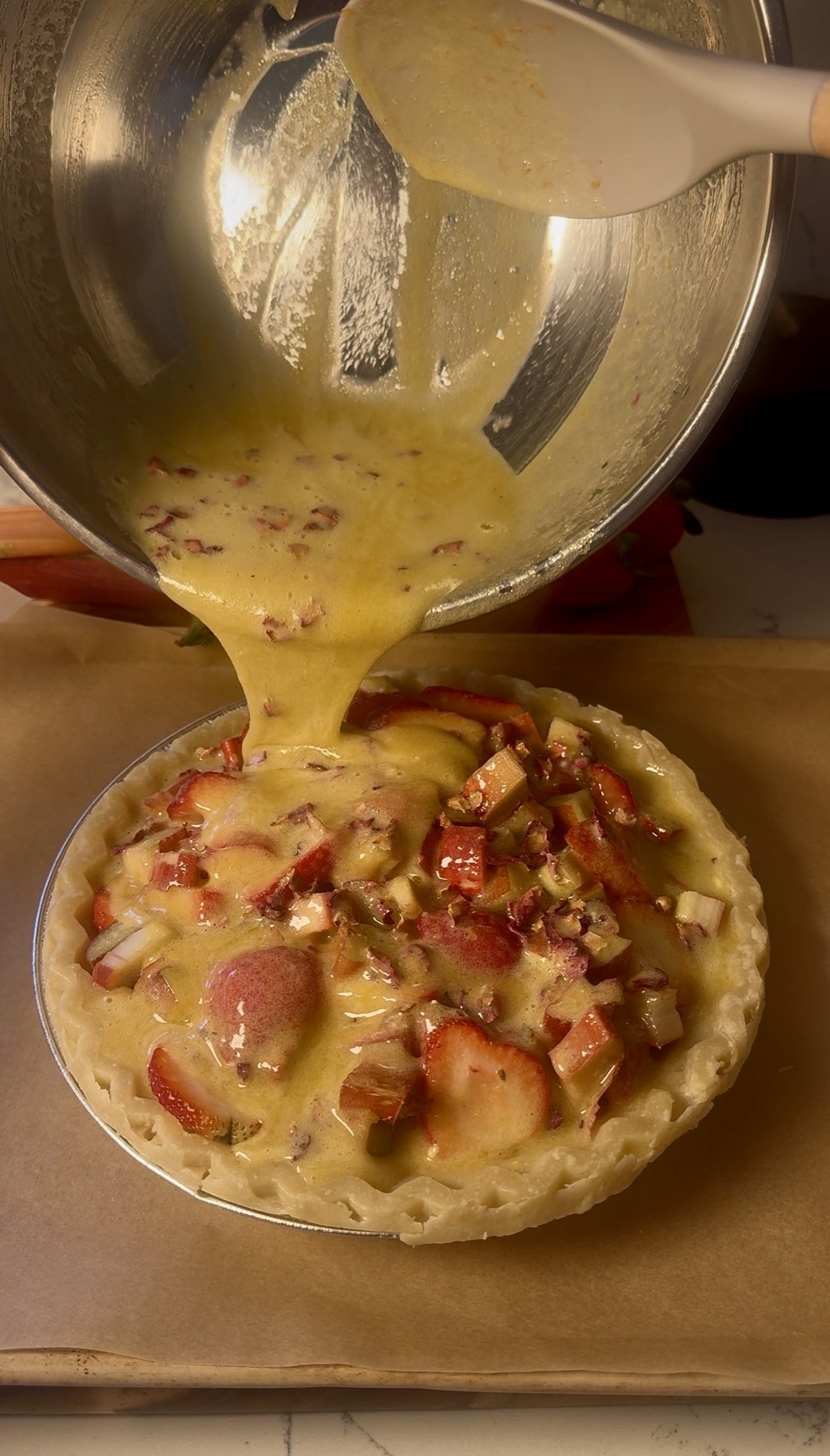
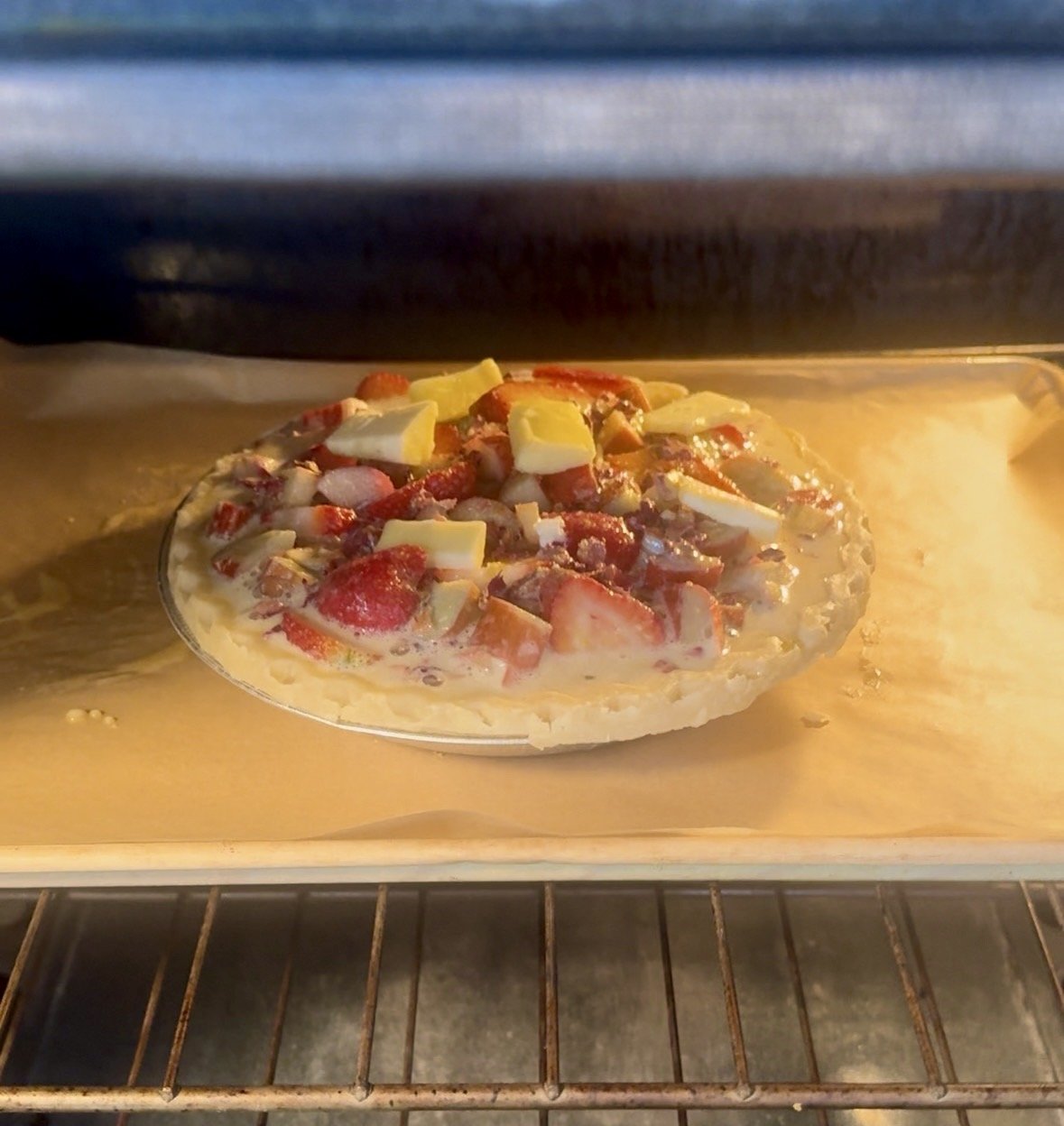
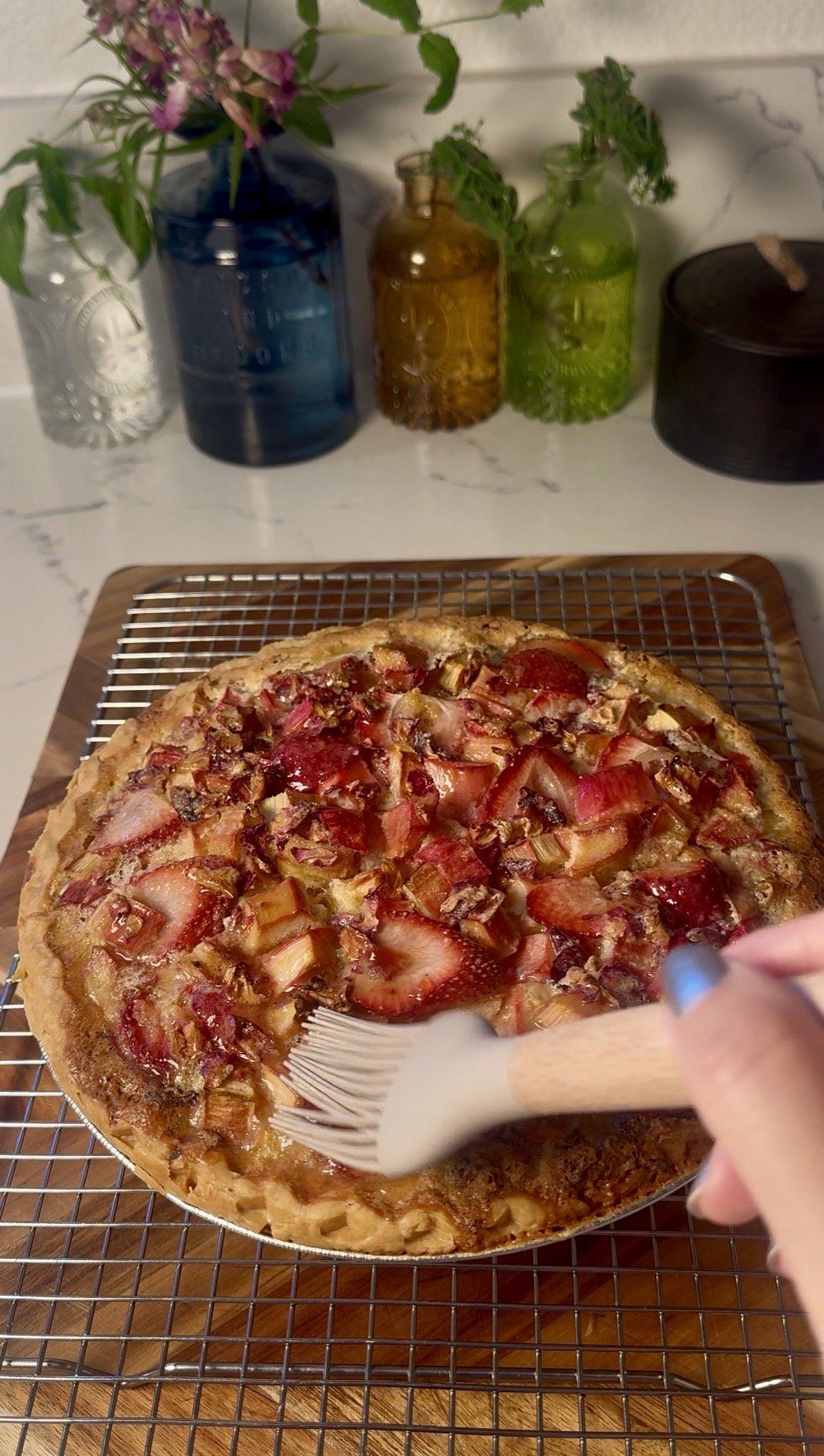
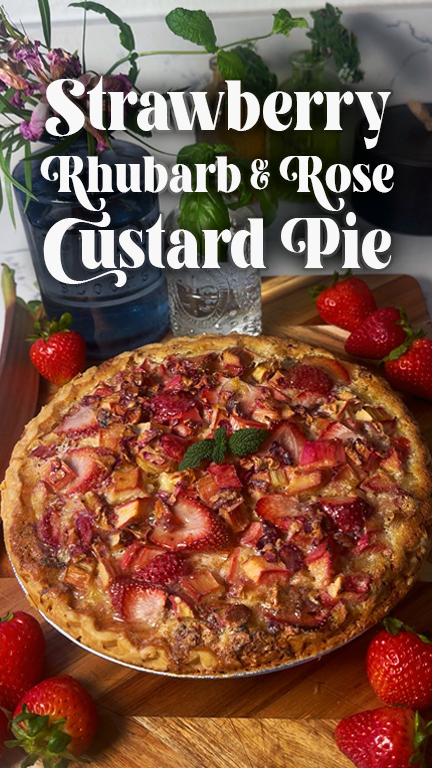
A strawberry rhubarb custard pie with rose water and dried rose petals folded into the filling. Rhubarb was once worth four times the price of saffron. The cultivated strawberry didn't exist until the 1750s, and it took a French spy to set it in motion. Some things taste better with a little history in them.
Based on a recipe by Chef John from FoodWishes.com, with rose custard adaptations by Aurum Nostrum.
Some Lore
Rhubarb has one of the stranger culinary histories of any plant we now treat as ordinary. For most of its documented past — thousands of years across Central Asia and China — it was medicine, not food. The root was traded along ancient routes for its use as a purgative, and by the time it reached Europe in the sixteenth century, it was selling for ten times the price of cinnamon and four times the price of saffron.
In herbalism, plants that are medicine are considered yang — activating, moving, corrective. Plants that are food are yin. Rhubarb spent centuries as one before it was allowed to become the other.
It only crossed over once sugar became affordable enough to make it palatable — a quiet shift in the eighteenth century, from apothecary to kitchen.
Strawberries have an older relationship with desire. The wild strawberry appears in medieval paintings tucked into scenes of paradise — small, intensely fragrant, associated with righteousness and sensual pleasure at the same time, a tension the church found uncomfortable and the poets found irresistible.
The strawberry we know now didn't exist until the 1750s, and it took a spy to set it in motion. A French military engineer named Amédée-François Frézier — whose family name, as it happens, comes from fraise, the French word for strawberry — was sent on a secret mission to Chile by King Louis XIV, where he observed indigenous people cultivating a strawberry as large as a walnut. He smuggled five plants back to France in 1714.
Decades later, those Chilean plants ended up in a garden in Brittany alongside a North American variety, and they crossed on their own — bees doing what bees do. A young botanist named Antoine Nicolas Duchesne found the result, brought it to King Louis XV, and the king was delighted. Duchesne documented the hybrid formally, named it Fragaria ananassa for its faint pineapple scent, and that was that. A new fruit, born from two continents, a royal court, and a lucky garden.